Ensure real-time alarm visibility across remote assets
To improve alarm response and reporting, teams need a solution that quickly routes alerts and automates report generation. SmartSights provides the capability to reach the right people, automate reports, and keep critical information accessible across remote sites.
Trusted by 30,000+ industrial customer across the globe.
STAY AHEAD ACROSS REMOTE ASSETS
Your assets are spread out. Your visibility should be centralized.
Distance slows response and complicates oversight. Well pads, pipelines, and processing facilities generate critical data. Extending alarms, reports, and operational information beyond a fixed control room helps teams stay informed across a distributed deployment.
ALARM MANAGEMENT
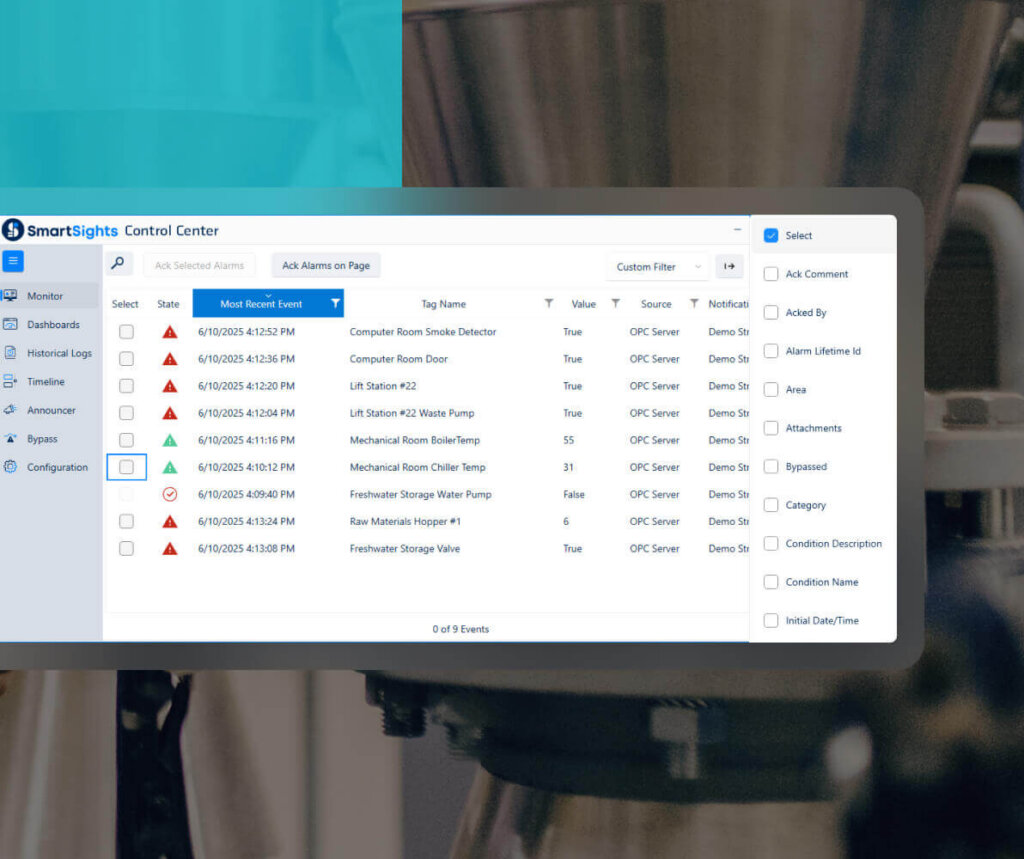
Reach the right person without waiting for a site visit
Remote sites and complex control systems slow alarm response in oil and gas. WIN-911 monitors the alarms already configured in your SCADA or DCS and notifies the right person by phone, text, email, or app, even when the link to a remote site drops. Subscriptions by facility, region, or type keep routing manageable across thousands of alarm points and hundreds of contacts.
REPORTING & COMPLIANCE
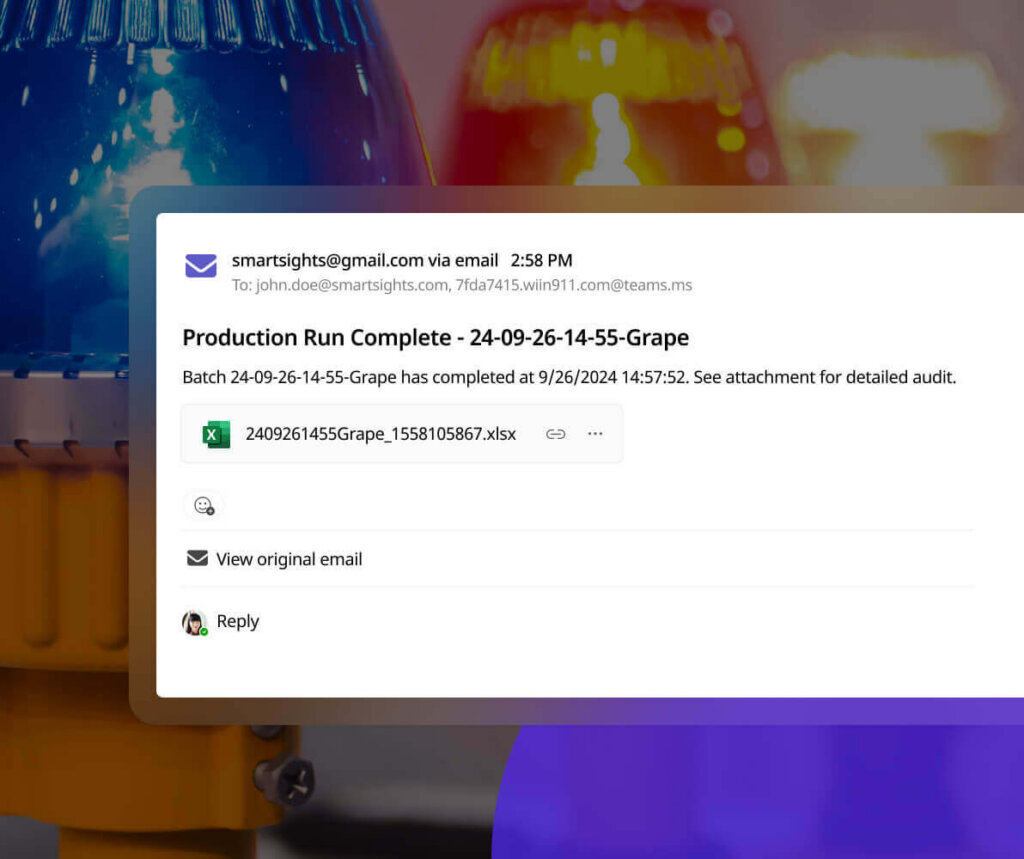
Turn field and alarm data into reports automatically
Production summaries and regulatory filings often require pulling data from many systems. XLReporter connects to SCADA, historians, and databases to automate recurring reports. It includes out of box alarm management reports based on standard ISA 18.2 KPI to analyze bad actor alarms, stale and chattering, cascading alarm flood conditions, and much more.
FIELD MOBILITY
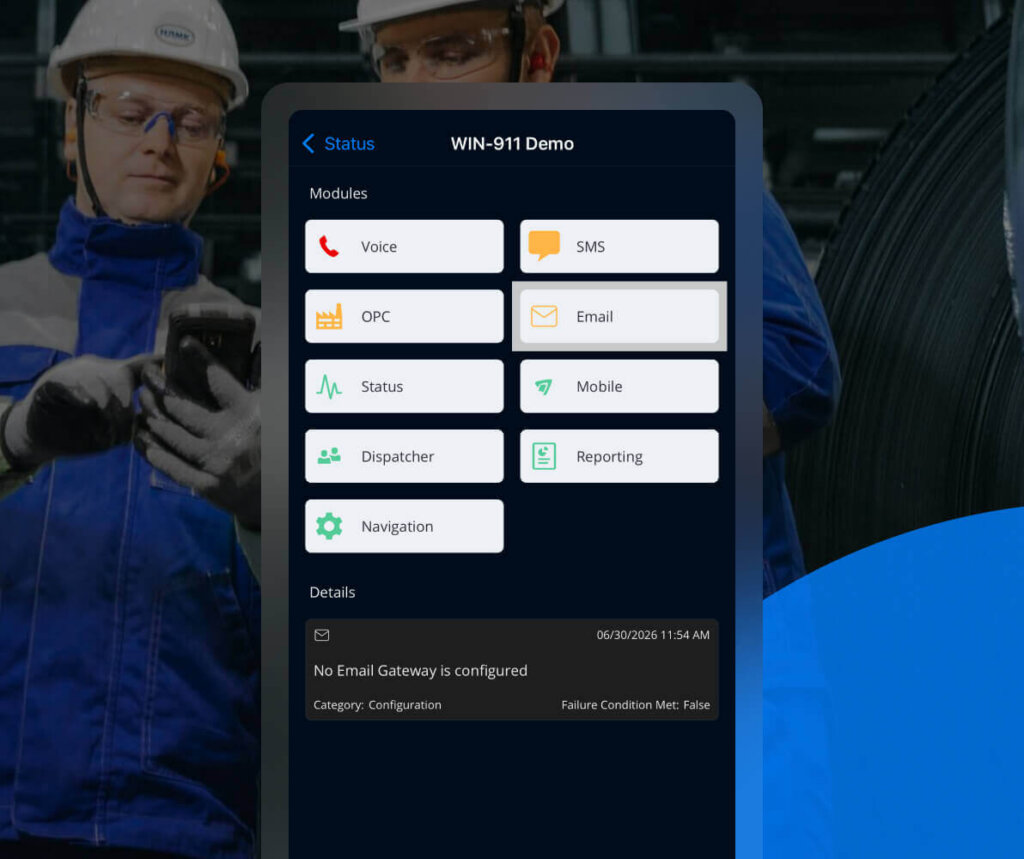
One streamlined interface for response and team management from the field
SmartSights Mobile serves field techs, managers, and IT in a single solution. Techs can acknowledge an alarm, loop in a coworker, or check an asset’s last reading without digging through menus at a wellsite. Managers can check team status and swap the on-call order from anywhere, even from a truck before a long weekend. Because it runs through a modular edge gateway that requires no inbound firewall rules, extending visibility across a spread-out footprint doesn’t become a network security project.
Customer Stories
What SmartSights customers say
Targa Resources reduces operator overload with real-time alarm alerts.
“We rely on SmartSights WIN-911 to send us alarms whenever we’re away from the plant control panel working on other things. We used to have another alarm notifier, but WIN-911 is so much more convenient as it is hooked up to our plant call phone, and if something goes wrong, we know immediately and can hurry to fix the problem.”
Will WIN-911 work with the SCADA and connectivity we already have in the field?
Almost certainly. WIN-911 connects natively or through OPC to the SCADA and HMI platforms common in oil and gas, including AVEVA, Rockwell, GE, Ignition, and Schneider, so you don't need to replace what you run. It can also act as an independent backup layer that keeps getting alarms out if the link to a wellsite or compressor station drops. Its components communicate over HTTPS with certificate-based trust, and SmartSights Mobile connections are outbound-initiated, so no inbound firewall port is needed, with authentication through Microsoft Azure/Entra ID.
How does XLReporter handle production and compliance reporting?
XLReporter pulls live values from SCADA and historical trends from a historian, and it works without a historian if you don't have one. Manual field readings are captured in electronic forms instead of paper, and lab or measurement data can come from relational databases, so everything lands in the same report with no retyping.
How does XLReporter support alarm management and ISA-18.2 reporting?
XLReporter's ISA-18.2 alarm management module reads your existing alarm history database, so there is no separate system to stand up or duplicate data to maintain. Results can be broken down by facility, area, or operator position, with tag-level detail on nuisance alarms, chattering and fleeting alarms, floods, standing alarms, and acknowledgment times. That turns "our alarm rate is high" into "these five tags in this area are the problem."
What happens when alarm volume gets big, like thousands of points across many sites?
You define subscriptions by facility, region, or alarm type in a few clicks instead of configuring tag by tag, so routing scales with your subscriptions rather than your tag count. One production footprint, for example, handles roughly 250 alarm events and more than 24,000 notifications a day across 120 contacts without an unmanageable contact list.
How does licensing work, and what happens if a renewal slips?
WIN-911 is available as a subscription, which includes Customer Care and version upgrades, or as a perpetual license. If a license lapses, the runtime keeps running and notifications still go out, but configuration access is disabled and routing falls back to notifying everyone on every alarm. XLReporter behaves similarly: scheduled reports keep generating, interactive access is disabled, and reports are watermarked to flag that the license needs attention.
Do we need special hardware to get texts or calls out of a remote site?
Usually not. SMS, voice, email, and mobile push run over a standard network connection and a configured service account, with no new equipment. This also lets you retire old autodialers and pagers that depend on 2G/3G modems or copper phone lines carriers are phasing out, and hardware is only needed if you specifically want delivery over an analog line or dedicated cellular modem.
Can't find your answer here?
Our team is available to walk through any question you have.
Ready to stay ahead across your oil & gas operations?
See how SmartSights can help your teams reach the right people faster, reduce manual reporting, and keep critical operational information accessible across remote sites and facilities.
This website uses cookies to improve your experience. By clicking “Accept,” you agree to our Cookie Policy and Terms of Use. Accept
Our Cookies Policy
Privacy Overview
This website uses cookies to improve your experience while you navigate through the website. Out of these, the cookies that are categorized as necessary are stored on your browser as they are essential for the working of basic functionalities of the website. We also use third-party cookies that help us analyze and understand how you use this website. These cookies will be stored in your browser only with your consent. You also have the option to opt-out of these cookies. But opting out of some of these cookies may affect your browsing experience.
Necessary cookies are absolutely essential for the website to function properly. This category only includes cookies that ensures basic functionalities and security features of the website. These cookies do not store any personal information.
Any cookies that may not be particularly necessary for the website to function and is used specifically to collect user personal data via analytics, ads, other embedded contents are termed as non-necessary cookies. It is mandatory to procure user consent prior to running these cookies on your website.